
Search
00
GBAF Logo
trophy
Top StoriesInterviewsBusinessFinanceBankingTechnologyInvestingTradingVideosAwardsMagazinesHeadlinesTrends

Subscribe to our newsletter

Get the latest news and updates from our team.

Global Banking & Finance Review®

Global Banking & Finance Review® - Subscribe to our newsletter

Company

    GBAF Logo
    • About Us
    • Profile
    • Privacy & Cookie Policy
    • Terms of Use
    • Contact Us
    • Advertising
    • Submit Post
    • Latest News
    • Research Reports
    • Press Release
    • Awards▾
      • About the Awards
      • Awards TimeTable
      • Submit Nominations
      • Testimonials
      • Media Room
      • Award Winners
      • FAQ
    • Magazines▾
      • Global Banking & Finance Review Magazine Issue 79
      • Global Banking & Finance Review Magazine Issue 78
      • Global Banking & Finance Review Magazine Issue 77
      • Global Banking & Finance Review Magazine Issue 76
      • Global Banking & Finance Review Magazine Issue 75
      • Global Banking & Finance Review Magazine Issue 73
      • Global Banking & Finance Review Magazine Issue 71
      • Global Banking & Finance Review Magazine Issue 70
      • Global Banking & Finance Review Magazine Issue 69
      • Global Banking & Finance Review Magazine Issue 66
    Top StoriesInterviewsBusinessFinanceBankingTechnologyInvestingTradingVideosAwardsMagazinesHeadlinesTrends

    Global Banking & Finance Review® is a leading financial portal and online magazine offering News, Analysis, Opinion, Reviews, Interviews & Videos from the world of Banking, Finance, Business, Trading, Technology, Investing, Brokerage, Foreign Exchange, Tax & Legal, Islamic Finance, Asset & Wealth Management.
    Copyright © 2010-2026 GBAF Publications Ltd - All Rights Reserved. | Sitemap | Tags | Developed By eCorpIT

    Editorial & Advertiser disclosure

    Global Banking & Finance Review® is an online platform offering news, analysis, and opinion on the latest trends, developments, and innovations in the banking and finance industry worldwide. The platform covers a diverse range of topics, including banking, insurance, investment, wealth management, fintech, and regulatory issues. The website publishes news, press releases, opinion and advertorials on various financial organizations, products and services which are commissioned from various Companies, Organizations, PR agencies, Bloggers etc. These commissioned articles are commercial in nature. This is not to be considered as financial advice and should be considered only for information purposes. It does not reflect the views or opinion of our website and is not to be considered an endorsement or a recommendation. We cannot guarantee the accuracy or applicability of any information provided with respect to your individual or personal circumstances. Please seek Professional advice from a qualified professional before making any financial decisions. We link to various third-party websites, affiliate sales networks, and to our advertising partners websites. When you view or click on certain links available on our articles, our partners may compensate us for displaying the content to you or make a purchase or fill a form. This will not incur any additional charges to you. To make things simpler for you to identity or distinguish advertised or sponsored articles or links, you may consider all articles or links hosted on our site as a commercial article placement. We will not be responsible for any loss you may suffer as a result of any omission or inaccuracy on the website.

    Home > Technology > Understanding the Contactless Revolution
    Technology

    Understanding the Contactless Revolution
    Published by Jessica Weisman-Pitts

    Posted on July 10, 2023

    4 min read

    Last updated: February 1, 2026

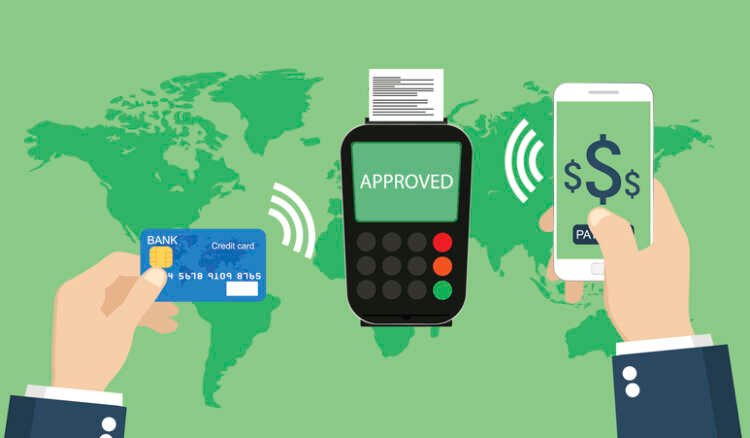
    A retail checkout scene showcasing contactless payment technology, highlighting the shift towards sustainable payment methods in the banking industry, as discussed in the article on the contactless revolution.
    Contactless payment technology in use at a retail checkout - Global Banking & Finance Review
    Why waste money on news and opinion when you can access them for free?

    Take advantage of our newsletter subscription and stay informed on the go!

    Subscribe

    Tags:paymentsinnovationsustainabilityfinancial servicesdigital payments

    Quick Summary

    Pavlo Khropatyy, VP, Global Head of Delivery FS&I,

    Understanding the Contactless Revolution

    Pavlo Khropatyy, VP, Global Head of Delivery FS&I, Intellias

    Stand in the payment queue at any shop in 2023, and many of the transactions taking place will likely be contactless. Indeed, according to industry research, nearly 60% of in-store shoppers paid using a contactless card last year – an increase of 94% compared to the 12 months before.

    Among the various drivers of this important trend are the environmental, social, and governance (ESG) policies pursued across the financial services industry. These include efforts to significantly reduce the use of plastic cards across the payment ecosystem – a move which could eventually see mobile contactless apps become the primary payment method.

    Considering the ESG standpoint, it becomes evident why the issue holds significance. Approximately 6 billion plastic payment cards are produced annually, with 2.8 billion being credit cards utilised worldwide. These credit cards amount to a staggering 140 million kilograms of plastic, which poses a considerable environmental burden. In light of organisations’ widespread efforts to minimise plastic consumption, this situation is unsustainable, particularly when technological innovations are readily accessible.

    Moving Towards Net Zero

    Part of the problem with the disposal and recycling of plastic cards is that there are no regulations to manage them when they expire or need to be replaced. For most people, disposal has generally involved cutting them into pieces and throwing them in the bin. This approach circumvents recycling options altogether, but is one that is perhaps understandable given the apparent security concerns. As a result, this waste plastic will generally end up in landfill.

    So, what are the prospects for further growth in using contactless payment systems, and where might the industry be heading in the coming years? Firstly, it’s worth noting that the financial services industry has a strong track record of embracing tech-led innovation. As far back as the 1950s, the industry drove the adoption of credit cards in a move which, at the time, brought huge levels of payment convenience. Today, innovation continues to drive positive change, with the digital payments system transforming the speed and convenience of everyday transactions.

    However, what needs to come next is for more organisations across the sector to set out their plans to reach net zero. This is no easy challenge, particularly for today’s large and complex businesses that operate across national boundaries to deliver a 24/7/365 business model. Where relevant, minimising or even eliminating the use of plastic can provide significant progress, particularly given the vast number of cards in circulation.

    Using contactless payment and mobile e-wallets allow people to stop using plastic cards completely. Whether transactions are completed via a phone app or even a watch, these systems saw significant growth during the Covid-19 pandemic, where many people were reluctant to use physical cash, especially when an effective alternative was readily available. Building on this growth trend will continue to take more plastic cards out of circulation, especially if financial services and app developers can continue to improve accessibility options for people who remain reluctant to switch from physical cards or cash.

    Whilst the shift to digital payments brings new risks to security, it has in fact brought significant improvements compared to traditional plastic cards. By leveraging encryption features, authentication protocols, and real-time monitoring of payments, digital payment methods offer significant protection against fraud. These advanced security measures help organisations stay ahead of evolving threats and can provide users with greater confidence in the security of their financial transactions.

    Bridging the Digital Divide

    However, while the shift towards a digital, contactless payment system offers a wide range of benefits, it also brings some challenges that must be taken into account. One of the most significant is the digital divide between consumers with full and easy access to smartphones, reliable internet, and the technological know-how required to use them, and those without. This issue can disproportionately impact older generations in particular and creates the risk of financial exclusion – a situation that must be avoided.

    To address these challenges, there is an ongoing need for more effective educational initiatives from both the industry and government. These initiatives should focus on breaking down barriers and empowering consumers to feel confident transitioning to digital payment systems. Through comprehensive training and support, organisations and government entities can bridge the digital divide, ensuring that everyone can move towards a digital payment future.

    There’s no doubt, then, that the expiry date for the use of plastic cards in the payment process is fast approaching – the question for the industry is how soon they can be removed from the environmental burden it creates for the benefit of everyone.

    Frequently Asked Questions about Understanding the Contactless Revolution

    1What are ESG policies?

    Environmental, Social, and Governance (ESG) policies are standards for a company’s operations that socially conscious investors use to screen potential investments, focusing on sustainability and ethical practices.

    2What is digital payment security?

    Digital payment security refers to the measures and technologies used to protect online transactions from fraud and unauthorized access, ensuring the safety of sensitive financial information.

    More from Technology

    Explore more articles in the Technology category

    Image for Debtist: Digital Debt Collection for Modern Businesses
    Debtist: Digital Debt Collection for Modern Businesses
    Image for Infosecurity Europe launches new Cyber Startup Programme to champion the next generation of cybersecurity innovators
    Infosecurity Europe launches new Cyber Startup Programme to champion the next generation of cybersecurity innovators
    Image for BLOXX Launches ĀRIKI BLOXX at Web Summit Qatar
    BLOXX Launches ĀRIKI BLOXX at Web Summit Qatar
    Image for Engineering Trust in the Age of Data: A Blueprint for Global Resilience
    Engineering Trust in the Age of Data: A Blueprint for Global Resilience
    Image for Over half of organisations predict their OT environments will be targeted by cyber attacks
    Over half of organisations predict their OT environments will be targeted by cyber attacks
    Image for Engineering Financial Innovation in Renewable Energy and Climate Technology
    Engineering Financial Innovation in Renewable Energy and Climate Technology
    Image for Industry 4.0 in 2025: Trends Shaping the New Industrial Reality
    Industry 4.0 in 2025: Trends Shaping the New Industrial Reality
    Image for Engineering Tomorrow’s Cities: On a Mission to Build Smarter, Safer, and Greener Mobility
    Engineering Tomorrow’s Cities: On a Mission to Build Smarter, Safer, and Greener Mobility
    Image for In Conversation with Faiz Khan: Architecting Enterprise Solutions at Scale
    In Conversation with Faiz Khan: Architecting Enterprise Solutions at Scale
    Image for Ballerine Launches Trusted Agentic Commerce Governance Platform
    Ballerine Launches Trusted Agentic Commerce Governance Platform
    Image for Maximising Corporate Visibility in a Digitally Driven Investment Landscape
    Maximising Corporate Visibility in a Digitally Driven Investment Landscape
    Image for The Digital Transformation of Small Business Lending: How Technology is Reshaping Credit Access
    The Digital Transformation of Small Business Lending: How Technology is Reshaping Credit Access
    View All Technology Posts
    Previous Technology PostReady-to-assemble digital strategy: why Europe should look to Scandinavia for digitisation inspiration
    Next Technology PostThe power of the ring – Wayve Pay revolutionizes the European payment landscape with an innovative wearable payment solution in form of a ring